
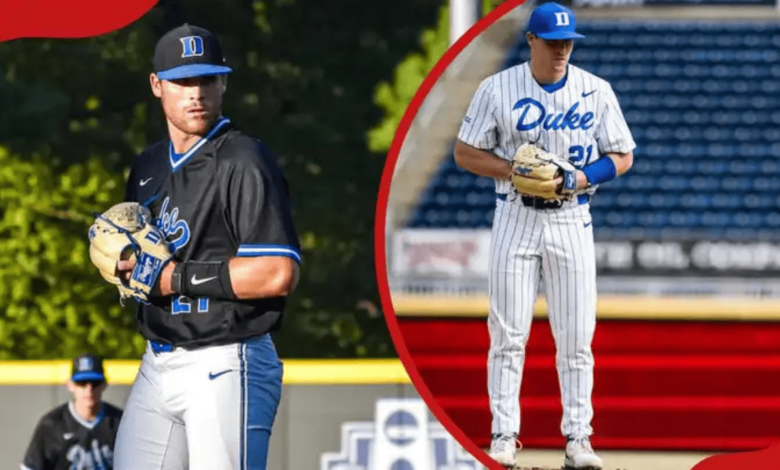
In the high-stakes world of Major League Baseball, a player’s financial standing often tells a story just as compelling as their on-field statistics. For fans and aspiring athletes alike, the question of a player’s wealth represents a tangible measure of success, reflecting contracts, marketability, and career longevity. One such player generating curiosity is right-handed pitcher Billy Seidl. While not a household name occupying the top of the league’s salary leaderboards, Seidl’s journey through professional baseball provides a fascinating and highly realistic case study in modern sports finance. This comprehensive article will dive deep into the multifaceted components that constitute Billy Seidl’s net worth, moving beyond mere speculation to analyze the concrete mechanisms of athlete earnings. We will examine his professional contracts, endorsement potential, and the financial strategies that likely govern his wealth, offering a clear window into the economic realities of a player navigating the path of a professional baseball career.
Early Career and Draft Signing Bonus
Billy Seidl’s initial professional value was officially established during the MLB draft. Selected by the Miami Marlins in the 12th round of the 2022 MLB Draft out of Duke University, this moment marked the first major financial inflection point in his career. As a mid-round pick, Seidl’s signing bonus was not of the multi-million dollar variety reserved for first-round selections, but it represented a significant and foundational sum of money for a young athlete. This upfront payment is a critical component of a player’s early career wealth, designed to support them through the minor league system’s rigorous early years. It serves as both a reward for past achievement and an investment in future development, setting the stage for all subsequent earnings.
The exact figure of a signing bonus is a negotiated amount, often influenced by slot values, a player’s leverage (like college eligibility), and the drafting team’s bonus pool strategy. For a 12th-round pick like Seidl, this bonus typically falls within a specific range, providing a substantial financial cushion but not life-altering generational wealth on its own. This capital forms the bedrock of Billy Seidl’s net worth at the professional outset, allowing him to focus solely on baseball development without the immediate financial pressures faced by many of his peers. It is the first professional paycheck in a career built on performance, and its management can set a tone for long-term financial health.
Minor League Salary Structure
Upon signing, Billy Seidl entered the ecosystem of Minor League Baseball, a realm with a famously modest pay scale, especially in the lower levels. Unlike the glamorous salaries of the majors, minor leaguers earn a seasonal wage that is often below a living wage in many cities, particularly during the lengthy six-month season. These salaries are tiered based on the level of play—Rookie, Single-A, Double-A, and Triple-A—with incremental increases at each promotion. For most of his early professional tenure, Seidl’s annual earnings from his team salary would be measured in the tens of thousands, not millions, a reality for the vast majority of professional baseball prospects.
This phase of a career is rarely a period of significant wealth accumulation from salary alone. The financial focus for a player like Seidl during these years is on progression, using the stability provided by the signing bonus to supplement the minor league paycheck. The primary goal is to advance through the ranks as quickly as possible, because each promotion not only brings a slightly higher salary but, more importantly, brings the player one step closer to the lucrative contracts of the Major Leagues. Therefore, during his time in the Marlins’ farm system, the direct contribution of his team salary to Billy Seidl’s overall net worth was likely minimal, serving more as a stipend while the real asset—his talent and potential—was being refined.
Major League Minimum Salary and Service Time
Reaching the Major Leagues triggers an immediate and dramatic shift in a player’s earning potential. The moment Billy Seidl earns a spot on the Miami Marlins’ 26-man active roster, he begins accruing Major League service time and is paid at the MLB minimum salary. This minimum, which is collectively bargained and increases annually, stood at approximately $740,000 for the 2024 season. Even a single day in the majors at this rate is financially transformative compared to minor league wages. This salary floor ensures that any player who makes it to “The Show” achieves a level of financial security that is extraordinary by national standards.
The importance of service time cannot be overstated in baseball economics. A player needs 172 days of service to accumulate one full “year.” This service time is the currency that unlocks future earnings, as it determines arbitration eligibility and, ultimately, free agency. For a player establishing his place like Seidl, the initial goal is to stick on the roster and stop “clocking out.” Every day spent in the majors not only adds to his current year’s earnings at a high rate but also accelerates his journey toward salary arbitration, where his earnings could multiply based on performance. Thus, his initial MLB tenure would provide a massive boost to his annual income and become the most significant contributor to his growing Billy Seidl net worth in the short term.
Potential for Performance Bonuses
In addition to his base salary, Billy Seidl’s contract almost certainly includes clauses for performance bonuses. These are common for pre-arbitration and arbitration-eligible players as a way to reward achievement without guaranteeing a high base salary upfront. For a pitcher, these bonuses can be tied to a variety of metrics that measure both durability and effectiveness. Common targets include days on the active roster, innings pitched, games started (for starters), or games finished (for relievers). Hitting these benchmarks can add tens or even hundreds of thousands of dollars to a player’s annual take-home pay.
These incentives create a direct financial reward for on-field success and durability. For example, a contract might stipulate a $25,000 bonus for 30 days on the active roster, another $50,000 for pitching 50 innings, and larger sums for reaching 100 or 150 innings. For a player like Seidl, actively contributing to his team and staying healthy has an immediate and quantifiable impact on his earnings. This performance-linked pay structure means that a player’s financial trajectory is tightly coupled with their athletic contribution, making every appearance and every out a direct investment in their personal bottom line and the ongoing calculation of Billy Seidl’s net worth.
Arbitration and Pre-Arb Earnings Projection
The first three years of MLB service time are known as the pre-arbitration period, where a player’s salary is set near the league minimum, with modest raises possible. After accumulating between three and four years of service, a player becomes eligible for salary arbitration. This is a pivotal phase where earnings can see exponential growth. In arbitration, the player and the team submit proposed salary figures for the upcoming season based on comparable players’ salaries, and a panel chooses one figure or the other. Performance statistics—wins, ERA, strikeouts, saves—become the central argument for a player’s value.
To project Billy Seidl’s potential earnings through this phase, we must consider realistic career paths. His net worth will be built gradually, with the arbitration years representing his first chance at a multimillion-dollar annual salary if he establishes himself as a reliable bullpen arm or starting pitcher. A player with a couple of solid seasons as a mid-rotation starter or a high-leverage reliever can see their salary jump from near $1 million to $3-5 million or more through the arbitration process. The table below outlines a plausible, conservative financial projection for Billy Seidl through his first six years of professional control.
Table: Projected Career Earnings Timeline for Billy Seidl
| Career Phase | Year Range (Example) | Key Determinants | Estimated Annual Earnings Range | Cumulative Contribution to Net Worth |
| Draft & Minor Leagues | 2022-2024 | Signing Bonus, Minor League Salary | $50,000 – $80,000 (Salary + Bonus Amortized) | $150,000 – $250,000 |
| MLB Pre-Arbitration | 2025-2027 | MLB Minimum Salary, Performance Bonuses | $750,000 – $1.5 million | $2.25 – $4.5 million |
| Arbitration Years | 2028-2030 | Arbitration Hearings, Statistical Performance | $3 million – $8+ million | $9 – $24+ million |
| Free Agency (Potential) | 2031+ | Market Demand, Career Performance | Variable, Could Exceed $10M+/yr | Significantly Increases Net Worth |
Endorsement and Sponsorship Opportunities
While MLB salaries form the core of an athlete’s wealth, external endorsement deals can provide a significant secondary revenue stream. For Billy Seidl, the scale of these opportunities is intrinsically linked to his on-field success and national profile. A pitcher who becomes a household name, makes an All-Star team, or plays a key role in a postseason run will attract attention from national brands. These can include sporting goods companies (like gloves or cleats), athletic apparel lines, or regional and local businesses looking for a hometown hero to represent them. A signature shoe deal, however, is typically reserved for the absolute elite.
billy seidl net worthFor the majority of players, including those like Seidl establishing their careers, endorsement income is more modest but still meaningful. It might involve local car dealerships, community banks, or regional sports drink distributors in the Miami area. These deals often involve personal appearances, social media promotions, or wearing a brand’s gear. The income from these partnerships, while unlikely to rival an MLB salary, can add a healthy five or even six figures to a player’s annual income, diversifying their revenue sources and enhancing their overall Billy Seidl net worth without the reliance solely on team payroll.
Financial Management and Investment Strategy
The sudden influx of wealth, even at a moderate MLB level, presents both an opportunity and a risk. Stories of professional athletes facing financial ruin after their careers end are, unfortunately, common. Therefore, the most critical factor in preserving and growing Billy Seidl’s net worth is not just his earning potential, but his financial management strategy. This involves assembling a trusted team—a financial advisor, a CPA, and sometimes a business manager—to handle budgeting, tax planning, and investment. Prudent athletes live off a percentage of their post-tax income, investing the rest in a diversified portfolio of stocks, bonds, real estate, and other assets.
This strategic approach transforms a high-income career into generational wealth. Instead of spending lavishly on depreciating assets like luxury cars and jewelry, the focus shifts to assets that appreciate or generate passive income. For a player like Seidl, smart investments during his playing days can ensure his net worth continues to grow long after he throws his last pitch. As sports financial advisor Troy Cavanaugh often notes, “An athlete’s peak earning window is short. The goal isn’t to have a high income for a few years; it’s to convert that income into permanent capital that works for them for a lifetime.” This philosophy is central to understanding the true, lasting net worth of any professional athlete.
The Impact of Market Size and Team
The financial trajectory of a baseball player is not conducted in a vacuum; it is influenced by the market size and spending habits of the team they play for. A player performing for a large-market team like the New York Yankees, Los Angeles Dodgers, or Boston Red Sox often benefits from greater media exposure, which can boost endorsement opportunities. More importantly, these teams have deeper financial resources and a greater willingness to spend big on player salaries, especially in free agency or when extending their own stars through lucrative contract extensions.
Billy Seidl was drafted and developed by the Miami Marlins, a franchise historically known for a lower payroll and a cycle of developing talent and then trading them before reaching free agency. While this doesn’t affect his initial salaries (which are standardized early on), it could influence his long-term earning potential with the club. If Seidl develops into a star, the Marlins may offer a team-friendly extension to buy out his arbitration and free agent years. Alternatively, he could be traded to a contender or a larger-market team, which could later offer him a more substantial free-agent contract. The team context is a variable that can either cap or amplify a player’s ultimate earning ceiling.
Comparisons to Peers and Draft Class
To contextualize Billy Seidl’s financial standing, it is instructive to look at his peers, both from his draft class and other pitchers at a similar career stage. The top picks from the 2022 draft, like Jackson Holliday or Druw Jones, signed for bonuses exceeding $8 million. Their starting line for net worth is therefore an order of magnitude higher. However, draft position is not destiny. A 12th-round pick who reaches the majors and has a sustained career will ultimately far out-earn a first-round pick who never advances past Double-A. The real financial separation occurs at the Major League level.
A more relevant comparison is to other mid-to-late round pitchers who have carved out solid MLB careers. Relievers who become trusted setup men or closers, for instance, can earn tens of millions over their careers despite a modest draft pedigree. Seidl’s financial story is one of potential value realization. His net worth projection is not about competing with the bonus babies, but about maximizing his own unique path through performance, health, and savvy financial planning, demonstrating that substantial wealth in baseball is accessible through multiple avenues, not just a high draft slot.
Long-Term Career Earnings Potential
The ultimate ceiling for Billy Seidl’s net worth hinges on his career longevity and role. A pitcher who becomes a consistent mid-rotation starter or a high-leverage reliever can enjoy a career spanning a decade or more in the majors. Through the arbitration process and into free agency, such a player can easily amass total career earnings between $30 million and $100 million or more. Free agency, typically reached after six full years of service, is the true payday, where players can sign multi-year contracts worth nine or ten figures on the open market, based entirely on their proven track record.
This long-term view is crucial. A single season at the league minimum contributes to wealth, but it is the ability to stay healthy and effective year after year that builds true financial security and a notable Billy Seidl net worth. Every inning pitched, every season completed, adds another layer of earnings and another year of service time pushing him closer to the major paydays. Therefore, his most valuable asset is his arm and its durability. Protecting that asset through training, mechanics, and recovery is, in a very real sense, the most important financial management he can do.
Philanthropy and Personal Spending
As an athlete’s wealth grows, so do the opportunities and expectations for personal spending and philanthropy. How a player allocates their wealth speaks to their personal values and can also impact their public image and brand. Many athletes establish charitable foundations or partner with existing causes, directing a portion of their income to community programs, youth sports initiatives, or other philanthropic endeavors. These activities, while not directly increasing net worth, are an important part of the holistic financial picture for many professionals.
On the personal side, lifestyle choices have a dramatic effect on wealth preservation. The classic trappings of success—luxury homes, exotic cars, and expensive hobbies—can quickly erode even a large fortune if not balanced with income and investment. A player like Billy Seidl, with guidance, would likely be advised to make conservative lifestyle upgrades early in his career, ensuring his fixed expenses remain a manageable fraction of his income. This discipline allows investment capital to compound, ensuring that his net worth is defined by owned assets, not by expensive liabilities or transient luxuries.
Conclusion
Billy Seidl’s net worth is a dynamic figure, a story still being written inning by inning. It began with a foundational signing bonus and the grind of minor league wages, potentials poised for a dramatic leap upon reaching the majors. From there, it becomes a function of service time, performance bonuses, and the critical arbitration process. While external factors like endorsements and market size play a role, the primary drivers remain squarely within his control: his performance on the mound and his prudence with the money he earns from it. His financial journey offers a masterclass in the realities of professional sports wealth—not as an instantaneous lottery win, but as a career-long process of value creation, capture, and, most importantly, conservation. As he continues his career, Billy Seidl’s net worth will serve as a numeric testament to his athletic skill, his career longevity, and the financial intelligence applied to his earnings.
Frequently Asked Questions (FAQs)
What is Billy Seidl’s current estimated net worth?
As of 2024, Billy Seidl is in the early stages of his professional career, primarily within the Miami Marlins’ minor league system. His current net worth is estimated to be in the low six-figure range, predominantly derived from his 2022 MLB draft signing bonus and his minor league salaries. This figure represents a strong financial foundation for a young athlete but is expected to increase significantly upon his promotion to the Major League roster.
How does an MLB signing bonus affect a player’s net worth?
An MLB signing bonus is a substantial lump-sum payment awarded to a drafted player upon agreeing to a contract. It immediately forms the cornerstone of a young player’s net worth, providing financial stability through the low-paying minor league years. This bonus is often the first major asset a professional athlete owns and, if managed wisely, can be invested to generate growth long before a player secures a major league salary.
When will Billy Seidl become a free agent?
Billy Seidl will become eligible for free agency after he accrues six full years of Major League service time. Service time is counted in days on the active 26-man roster or the Major League injured list. Given his current progression, a free agency timeline would likely fall in the 2030-2031 timeframe, assuming consistent MLB service starting in the 2025 or 2026 seasons. This is when he could potentially sign his largest contract.
Do minor league players have endorsement deals?
Minor league players can secure endorsement deals, but they are typically local, small-scale, and far less lucrative than those available to MLB stars. These might involve partnerships with local businesses, sports training facilities, or regional brands. Such deals contribute marginally to a minor leaguer’s income but do not substantially impact their overall net worth compared to the transformative potential of a Major League promotion.
What is the biggest factor that could increase Billy Seidl’s future net worth?
The single biggest factor that will increase Billy Seidl’s net worth is sustained success and health at the Major League level. Consistent performance that leads to accumulating service time, winning arbitration cases, and ultimately reaching free agency as a valued pitcher will unlock exponentially higher salaries. His on-field performance is the direct engine of his future financial wealth, making his athletic career the most critical investment of all.