
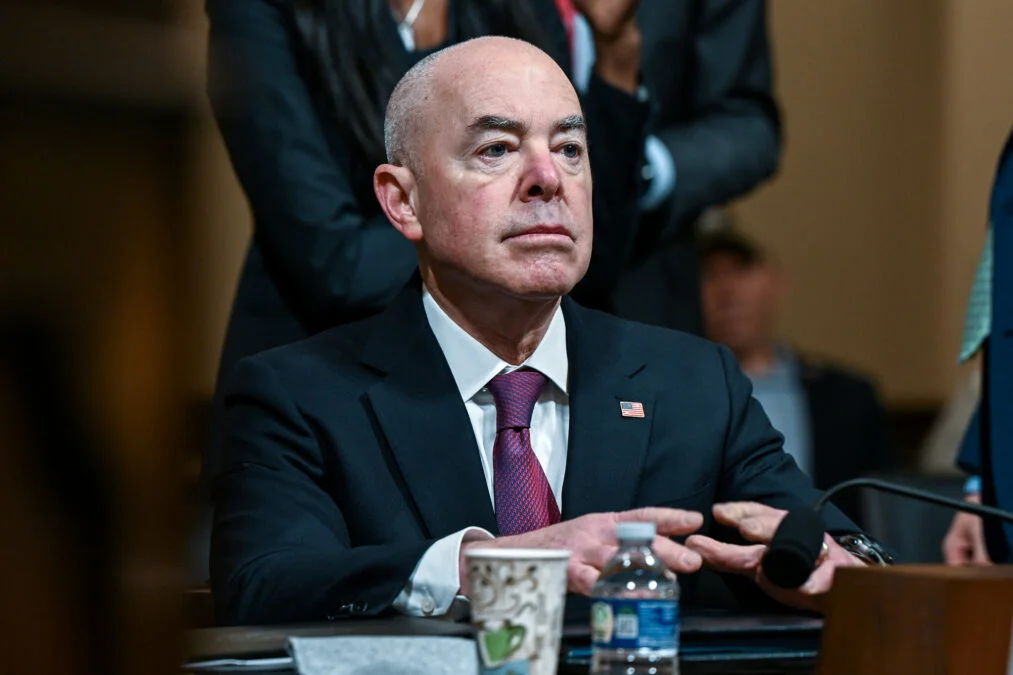
In the intricate world of Washington, D.C., where public figures are scrutinized under a relentless spotlight, the stories of their partners often remain in the background. Yet, these individuals frequently wield significant influence through support, counsel, and independent pursuit of meaningful causes. Tanya Mayorkas stands as a compelling example of this dynamic. While her name entered broader public consciousness through her husband, Secretary of Homeland Security Alejandro Mayorkas, her own identity is shaped by a distinct blend of professional acumen, philanthropic dedication, and steadfast commitment to family and community. Unlike political spouses who seek the camera’s gaze, Tanya Mayorkas has cultivated a life of impactful, often private, engagement. This article explores the multifaceted dimensions of Tanya Mayorkas, examining her background, her role as a trusted advisor and partner, her philanthropic endeavors, and the delicate balance she maintains between private life and her unavoidable proximity to the public sphere. Her journey offers a nuanced look at modern partnership, influence, and the quiet power of advocacy behind some of the nation’s most visible leadership roles.
The Formative Years and Personal Background
Understanding the person behind the name requires a look at her origins. Tanya Mayorkas was born Tanya Shwartz, and details of her early life and family background have been kept deliberately private, a choice that reflects a consistent preference for a life away from public dissection. This privacy itself is a defining characteristic, setting a tone for how she would later navigate the pressures of political adjacency. It is known that her heritage and upbringing instilled values of community, education, and service, principles that have clearly guided her adult life and choices. Her personal narrative is not one constructed for public consumption but is instead built on the solid, unpretentious foundations of family and personal integrity.
Her educational and early professional path further shaped her worldview. While specific details of her academic career are not widely publicized, her subsequent actions and affiliations demonstrate a sharp intellect and a capacity for strategic thought. She built a professional life grounded in substantive fields, likely involving law, community organizing, or nonprofit work, which equipped her with the analytical tools and empathetic understanding necessary for her later philanthropic and advisory roles. This period was crucial for developing the independent identity that she would maintain even as her husband’s career ascended to the highest levels of the U.S. government.
The Partnership with Alejandro Mayorkas: A Pillar of Support
The relationship between Tanya and Alejandro Mayorkas is a cornerstone of both their lives, one that has endured through the immense pressures of public service. They met long before the national spotlight found them, building a partnership based on mutual respect, shared values, and deep personal connection. Friends and acquaintances often describe them as a unified team, where Tanya’s perspective is not merely spousal but is considered a critical, grounding source of insight. Her support has been a constant through his tenure as Deputy Secretary of Homeland Security, United States Attorney, Director of U.S. Citizenship and Immigration Services, and ultimately as Secretary. This long arc of service means Tanya Mayorkas has experienced the full spectrum of Washington’s demands, from policy triumphs to intense political battles.
Within this dynamic, her role transcends traditional spousal duties. She is widely regarded as a trusted confidante and sounding board. In the high-stakes environment of national security and immigration policy, where decisions carry profound weight, having a partner who provides candid, thoughtful, and detached perspective is invaluable. Tanya Mayorkas offers that respite—a space for private reflection away from the policy fray. Her influence, therefore, is felt not in public pronouncements but in the private counsel that helps shape resilience and clarity in a figure tasked with protecting the homeland. This form of influence is immense yet intentionally unquantifiable, a testament to the strength of their private bond.
Philanthropic Focus and Community Advocacy
Away from the corridors of power, Tanya Mayorkas has carved out a significant space for herself in philanthropy and community work. Her efforts are characterized not by seeking attention but by achieving tangible impact. She has been particularly involved with organizations focused on education, refugee resettlement, and supporting at-risk youth—causes that often directly intersect with the policy areas her husband oversees, yet from a distinctly humanitarian and ground-level perspective. This parallel track allows her to engage with the human consequences of systemic issues, informing her understanding and, by extension, potentially enriching the private conversations within her partnership.
Her advocacy is hands-on and strategic. Rather than simply lending her name, Tanya Mayorkas involves herself in the operational and strategic dimensions of the nonprofits she supports. This might involve participating in board governance, fundraising strategy, or program development. For instance, her work with groups aiding refugees demonstrates a commitment to the individuals and families navigating the very immigration systems her husband’s department administers. This creates a unique, 360-degree view of some of America’s most complex challenges: seeing the policy from the top and its effects on the ground. Her philanthropic portfolio is a direct expression of her personal values, executed with a professionalism that stands on its own merits.
Navigating Public Scrutiny and Guarding Privacy
The life of a cabinet secretary’s spouse involves an inherent and often intense level of public scrutiny. For Tanya Mayorkas, managing this reality has meant mastering the art of selective visibility. She makes rare public appearances, typically at official ceremonial functions like the inauguration or certain diplomatic events, where her presence is supportive and dignified. She grants no interviews, maintains no public social media profiles dedicated to her personal views, and offers no commentary on policy or politics. This disciplined approach is not an accident but a carefully constructed shield to protect her family’s private life and her own independent identity.
This choice to remain private is a powerful statement in an age of constant self-broadcasting. It underscores a belief that her role is not to be a public commentator but a private anchor. The pressure she manages is multifaceted: it includes the security concerns that come with her husband’s position, the political attacks that inevitably extend to family, and the simple desire for normalcy for their children. By establishing firm boundaries, Tanya Mayorkas has successfully insulated her family’s core from the chaos of Washington, ensuring that their home life remains a sanctuary. This ability to maintain normalcy under extraordinary circumstances is perhaps one of her most significant and challenging achievements.
The Role of Family and Personal Resilience
At the heart of Tanya Mayorkas’s story is her commitment to family. She and Alejandro are parents to two daughters, and the primacy of their roles as mother and father is a recurring theme in what little is shared about their private life. Raising children in the eye of a political storm requires deliberate effort to provide stability, humility, and a sense of perspective. Friends indicate that Tanya is the central force in creating this stable home environment, ensuring that their daughters experience a childhood as ordinary as possible despite their father’s extraordinary responsibilities. This involves normal routines, emphasis on education and personal character, and protection from the media’s glare.
This focus on family is also a source of resilience. The unwavering support system within their home provides Secretary Mayorkas with the emotional fortitude needed for a job that involves daily, high-consequence decisions. In many ways, Tanya Mayorkas manages the home front, allowing her husband to focus on the national front. Her strength in this domain should not be underestimated; it involves logistical prowess, emotional intelligence, and a deep well of patience. The family unit, as she has helped cultivate it, acts as both a refuge and a recharge station, fundamental to sustaining the demanding pace of public service at the highest level.
Influence and Perception in the Political Ecosystem
The nature of a spouse’s influence in politics is always a subject of quiet speculation. In the case of Tanya Mayorkas, her influence is described by those in the know as substantive but channeled exclusively through private, trusted channels. She does not have a “portfolio” or a public policy agenda. Instead, her impact is felt in the realm of perspective and principle. She is said to remind her husband of the human stories behind the policy paperwork, of the long-term values over the short-term political noise, and of the importance of maintaining one’s moral compass. This form of influence is profound because it is rooted in personal trust and devoid of any public performance.
Public perception of Tanya Mayorkas is necessarily limited and often projected. To some, she is an enigmatic figure, the private spouse of a very public official. To others who understand the nuances of Washington, she is respected precisely for her discretion and evident strength. She successfully avoids the pitfalls that sometimes entangle political spouses: she is not seen as an unaccountable advisor, a distraction, or a liability. Instead, her image is one of dignified reserve and capability. This careful management of perception is a deliberate achievement, reinforcing the boundary she has set between the public duty of her husband and the private life of their family.
Comparative Analysis: The Modern Political Spouse Archetype
The role of the political spouse has evolved significantly. We can examine how Tanya Mayorkas fits within and diverges from common contemporary archetypes. The table below contrasts her approach with other visible models of political partnership.
| Archetype / Spouse Example | Key Characteristics | Public Engagement Style | Perceived Source of Influence | Tanya Mayorkas’s Alignment/Divergence |
| The Traditional Partner | Primarily ceremonial; focuses on hostess duties, family, and non-controversial charity. | Visible at official events; avoids policy. | Symbolic and social. | Aligns in ceremonial appearance and family focus. Diverges through deeper, strategic private counsel and substantive philanthropic work. |
| The Co-Political Strategist | Active in campaigning, policy shaping, and public messaging (e.g., Eleanor Roosevelt, Hillary Clinton). | Highly public; gives speeches, interviews, holds a policy platform. | Direct and publicly acknowledged. | Diverges Significantly. Tanya Mayorkas avoids all public political strategy and campaigning, wielding influence strictly in private. |
| The Independent Professional | Maintains a separate, high-profile career largely untouched by spouse’s role (e.g., Michelle Obama, lawyer/author). | Public through own career; carefully separates professional identity. | Through independent achievement and platform. | Partially Aligns. Her philanthropy is her “profession,” but it is low-profile and complementary, not fully separate. She merges independence with a supportive partnership role. |
| The Advocate Spouse | Champions a specific, often personal, cause linked to policy (e.g., Dr. Jill Biden on education). | Public champion of a cause; uses platform for awareness. | Through cause-based advocacy and visibility. | Diverges. While her causes are clear, she advocates for them privately through hands-on work, not public championing. |
This comparison highlights that Tanya Mayorkas occupies a unique space. She is neither a traditional, background figure nor a public co-strategist. She is a Private Influencer-Advocate, leveraging access and understanding for private counsel and ground-level philanthropic action, while consciously rejecting the public platform that comes with her position.
Philanthropy as a Reflection of Personal Values
Delving deeper into her philanthropic philosophy reveals a direct link between her actions and her core beliefs. The causes Tanya Mayorkas chooses to support are not random nor merely fashionable; they are extensions of a deeply held commitment to justice, opportunity, and human dignity. Her interest in refugee resettlement and immigrant support, for example, aligns with a belief in America’s promise as a nation of welcome—a principle central to her family’s own story as immigrants. Her work in education reflects a conviction that opportunity is built on the foundation of knowledge and access. This values-driven approach ensures her work is sustained and meaningful, not performative.
The methodology of her philanthropy is equally telling. It is characterized by a preference for effectiveness over publicity. This involves diligent research into organizations, a focus on metrics and outcomes, and a commitment to long-term engagement rather than one-off donations. This professional, almost analytical, approach to giving allows her to maximize her impact without needing a public relations component. It is philanthropy for the sake of the cause, not for the enhancement of a public image. In this way, Tanya Mayorkas uses her unique position and resources to affect change on a human scale, staying true to the values that guide her life irrespective of the political weather in Washington.
Managing the Intersection of Policy and Personal Interest
An inevitable and delicate aspect of her position is the intersection between her philanthropic interests and the policy domains of the Department of Homeland Security. Supporting refugee organizations while her husband leads the department overseeing asylum and border security could be seen as a conflict, or at least a complex duality. However, this intersection is precisely where her role becomes most nuanced. It allows her to understand the real-world humanitarian dimensions of policies often debated in abstract, political terms. This ground-level insight is a rare and valuable perspective that can inform private, spousal dialogue in a way that theoretical briefings cannot.
She navigates this intersection with clear ethical boundaries. There is no indication or suggestion that she lobbies for specific policies or tries to sway departmental decisions through her work. Instead, she operates in a separate, parallel sphere—the sphere of civil society and humanitarian response. This clear demarcation is crucial for maintaining integrity and avoiding even the appearance of impropriety. Her work complements the governmental function by addressing human needs that exist regardless of policy shifts, embodying the idea that a society’s strength is measured by both its security and its compassion. This balance is a quiet masterclass in ethical positioning.
The Unseen Demands and Personal Sacrifices
The life Tanya Mayorkas leads, by choice and circumstance, carries a set of demands that are largely invisible to the public. The security protocols alone transform daily life: the presence of protective details, the need for advance planning for simple outings, and the constant awareness of potential threats. These are not glamorous features but practical constraints that require adaptation and patience. Furthermore, the political polarization of the era means that her husband, and by extension their family, is subject to intense and often vicious criticism. Shielding their children from this negativity, while also providing unwavering support to her spouse, requires immense emotional strength.
The sacrifices are often those of ordinary freedom. Spontaneous family trips, casual dinners in public restaurants, or open social media sharing are largely forgone. The loss of anonymity is total and permanent. For someone who values privacy, this is a significant cost. Yet, these sacrifices are made not for personal ambition but in support of her husband’s calling to public service and for the stability of their family unit. The resilience Tanya Mayorkas demonstrates in facing these unseen demands is a testament to her character, built on a foundation of love, duty, and a clear-eyed understanding of the life they have chosen.
A Legacy Defined by Substance Over Spotlight
Ultimately, the narrative of Tanya Mayorkas is one that challenges the modern obsession with visibility as a measure of impact. In a culture that often equates influence with a large social media following or frequent media appearances, her story reasserts the enduring power of quiet dedication, private counsel, and substantive action. Her legacy is being written in the strength of her family, the success of the philanthropic endeavors she supports without fanfare, and the steadying influence she provides to a key national leader. This is a legacy built over decades, not crafted in news cycles.
As historian and presidential scholar Doris Kearns Goodwin once observed of influential partnerships throughout American history, “The best advisors and partners are those who provide not just agreement, but perspective—who can see the forest for the trees and remind the leader of their core purpose.” This encapsulates the role Tanya Mayorkas has played. She provides that essential perspective, grounding her husband’s public service in the enduring values of family, integrity, and human compassion. Her story underscores that true authority and influence can be exercised effectively from a position of purposeful privacy, and that a life of service can take many forms, both public and profoundly personal.
Conclusion
Tanya Mayorkas embodies a modern archetype of influence: one that is potent precisely because it is not broadcast. Her journey is a multifaceted study in partnership, resilience, and purposeful living. From her guarded private background to her strategic philanthropic work and her central role as the bedrock of her family, she has crafted a life of significant impact on her own terms. She operates in the vital space between the public mandates of governance and the private realities of human need, offering a unique brand of support that blends emotional grounding with insightful perspective. In an era of noise, her choice for quiet effectiveness is a powerful statement. The story of Tanya Mayorkas ultimately reminds us that behind many public figures sustaining the weight of national responsibility, there are partners of profound strength and substance, whose contributions, though often unseen, are indispensable to the fabric of leadership and service.
Frequently Asked Questions (FAQs)
What is Tanya Mayorkas known for?
Tanya Mayorkas is best known as the wife of U.S. Homeland Security Secretary Alejandro Mayorkas. However, independent of that role, she is recognized for her dedicated, low-profile philanthropic work, particularly with organizations focused on education, refugee resettlement, and community support. She is also known for her resolute commitment to maintaining her family’s privacy despite the public nature of her husband’s position.
Does Tanya Mayorkas have a public role in government?
No, Tanya Mayorkas holds no official government position or public role. She deliberately avoids the political spotlight and does not participate in policy development, public campaigning, or official government functions beyond rare ceremonial appearances. Her influence is exercised strictly in a private, personal capacity as a confidante and partner to the Secretary.
What philanthropic causes does Tanya Mayorkas support?
While she keeps specific affiliations private, Tanya Mayorkas is associated with causes related to humanitarian aid, immigrant and refugee support services, and educational initiatives. Her philanthropic approach is described as hands-on and strategic, focusing on the operational effectiveness of organizations rather than on public recognition for her support.
How does Tanya Mayorkas handle public scrutiny?
Tanya Mayorkas manages public scrutiny by establishing and maintaining firm boundaries. She does not grant interviews, maintain public social media profiles for commentary, or engage with political discourse. Her appearances are limited and ceremonial. This disciplined approach is designed to protect her family’s private life and allow her to focus on her philanthropic work and family without external interference.
Why is there limited information available about Tanya Mayorkas?
The limited public information about Tanya Mayorkas is a direct result of her conscious choice to live a private life. She and her family have prioritized normalcy and discretion, especially to protect their children. This scarcity of information is not an oversight but a deliberate strategy to separate her husband’s demanding public service from their personal sanctuary, a choice that has defined her approach to her unique position.